Most clinics think of revenue cycle management as what happens after a claim goes out: the follow-up calls, the appeals, the aging report nobody wants to open. In practice, the revenue is usually lost much earlier, at steps that look too small to matter. Here are five of them.
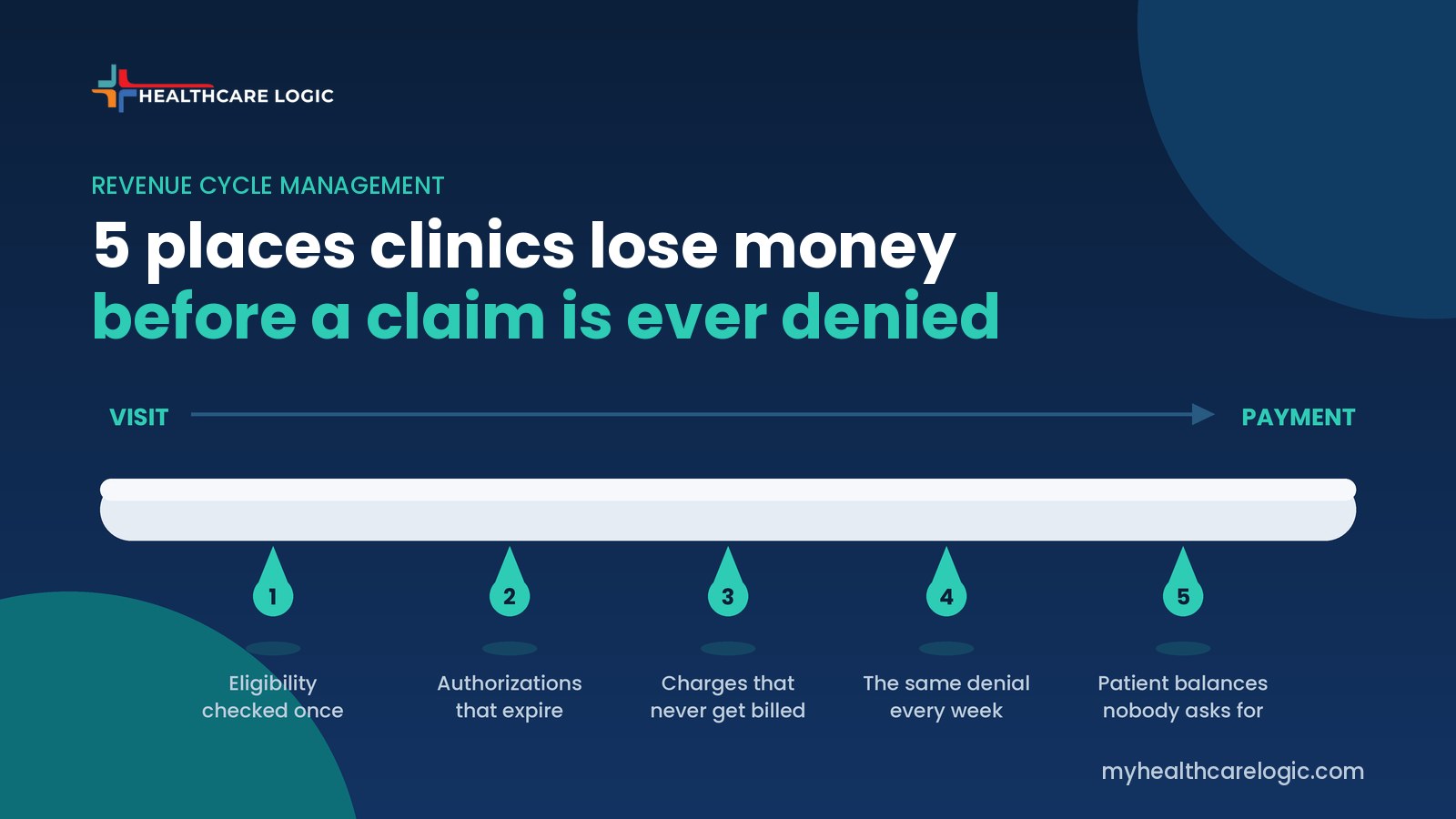
1. Eligibility checked once, not twice
Coverage changes between the day a visit is booked and the day the patient walks in, especially during open enrollment and at the start of a plan year. A clinic that verifies eligibility only at scheduling will see those changes come back weeks later as denials. Good revenue cycle management checks eligibility again within 48 hours of the visit.
2. Authorizations that expire quietly
Prior authorizations carry unit limits and end dates. When a behavioral health or ABA practice uses its last approved unit without noticing, every session after that is unpaid. The fix is a simple weekly report of authorizations with fewer than five units or fewer than 14 days remaining.
3. Charges that never reach billing
A documented service that is never turned into a claim is a “ghost charge,” and it is invisible on every report because there is nothing to deny. Reconciling the schedule against submitted claims each week catches these before the timely-filing window closes.
4. The same denial, every week
If a payer returns CO-16 or CO-4 on the same service month after month, the problem is not the appeal letter. It is a missing modifier, an unverified plan or a registration field left blank. Strong medical billing teams track denials by reason and fix the root cause at the front desk, not in the back office.
5. Patient balances nobody asks for
High-deductible plans have shifted a larger share of each visit to the patient. Balances that are not collected at check-in are far less likely to be collected at all. Clear estimates, card-on-file options and plain-language statements recover far more than a third collection letter.
Where to start
Pick the one gap that shows up most often in your denial report and fix only that for 30 days. Revenue cycle management improves fastest when it is treated as a chain of small front-end habits rather than a back-end rescue operation.
If your team is stretched too thin to run these checks every week, Healthcare Logics revenue cycle management services handle eligibility, authorizations, charge capture and denial prevention for FQHCs, rural health clinics, critical access hospitals, behavioral health and specialty groups. Request a free revenue cycle review and we will show you exactly where your claims are leaking.
Leave a Reply